The Shipwreck of the Primrose Hill

In November 2005 I took a walk through Maeshyfryd cemetery in Holyhead, and I stopped to look at the memorial to the HMS Thetis. I turned to walk away and I noticed a striking gravestone with a large angel atop. Closer inspection showed it to be the memorial to the crew of a ship named the Primrose Hill, which sank on the 28th of December 1900, with the loss of over 30 lives. There were several small loose stone tablets on the ground around the memorial, presumably individually added by loved ones. I had not heard the history of this ship so decided I would find out about it, and the information below is what I discovered.
The Barque – Primrose Hill – was built in 1886 by T. Royden & Sons of Liverpool. Her gross tonnage was 2520. She was approximately 300 feet in length, and was propelled by the sails from four masts, had two decks, and was of iron construction. She was owned by W. Price of Liverpool.
Under the flag of the United Kingdom, she left the waters of the Mersey for Victoria, Vancouver, Canada, on Christmas Eve 1900, under tow of the tug William Jolliffe. On the 28th December, the William Jolliffe put into Holyhead Port to report she had lost her tow off Bardsey the previous night. At 08:30 am a Coastguard telegraphist at the South Stack look-out saw the barque flying the distress signal ‘N.C.’ She was caught between a West North West gale, a force 10, and a flood tide.
The London and North Western Railway Co passenger ship SS Hibernia was at that time travelling back from Dublin to Holyhead. She immediately diverted to go to the assistance of the Primrose Hill. As the Hibernia got almost alongside the barque, her steering gear broke down. The Captain had to abandon the rescue, and was extremely lucky to save his passenger laden vessel without going ashore. Those on land who had gathered to watch the rescue were bewildered as to why the Hibernia had left the scene.
The Primrose Hill then dropped both anchors, but they dragged, and when within some 200 yards of the South Stack Lighthouse – her crew actually waving to those on the cliffs – she struck a submerged rock. The time was 14:00 hrs, the storm was most severe, and within five minutes – a remarkably short time for a steel vessel – she went to pieces. The location was South Stack Lighthouse, 1.5M, ESE. Lat, Long 53:17N, 04:41:01W. Her cargo is understood to have been bricks.
Of the 34 on board, 33 perished. 27 of the bodies were found, but only 12 were ever identified. 6 bodies were never recovered. All of the bodies that were found were interred at Holyhead, except for those of H. Hughes the Mate – interred in Liverpool, and S.G. Cakebread an Apprentice – interred in London.
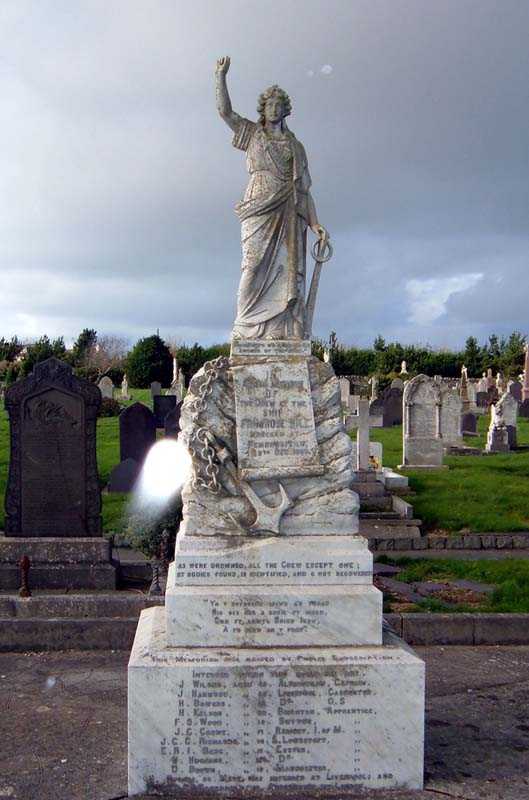
The Primrose Hill Memorial 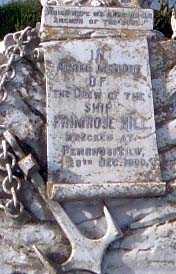
Primrose Hill Memorial Tablet 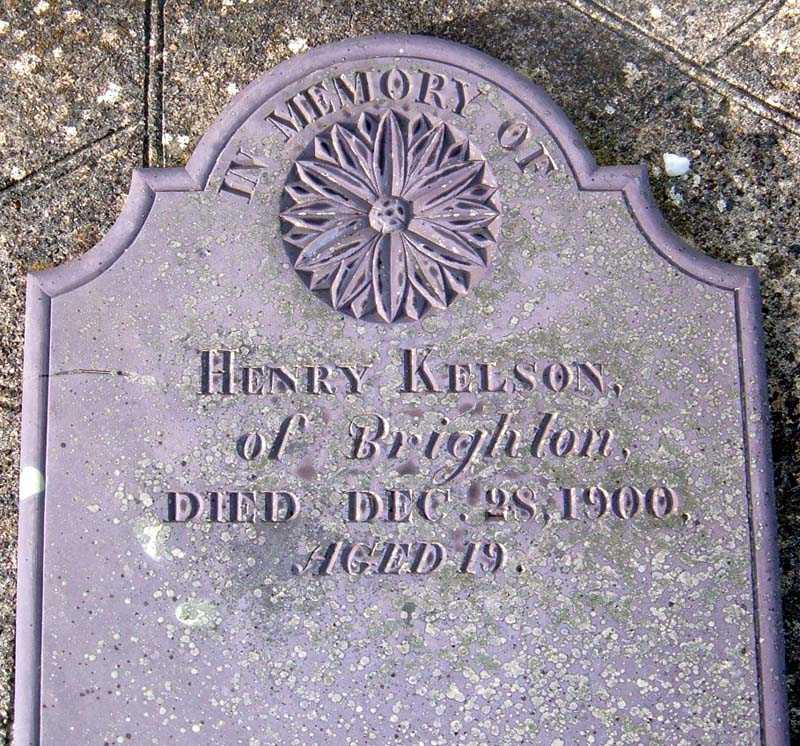
Memorial tablet to Henry Kelson – aged 19 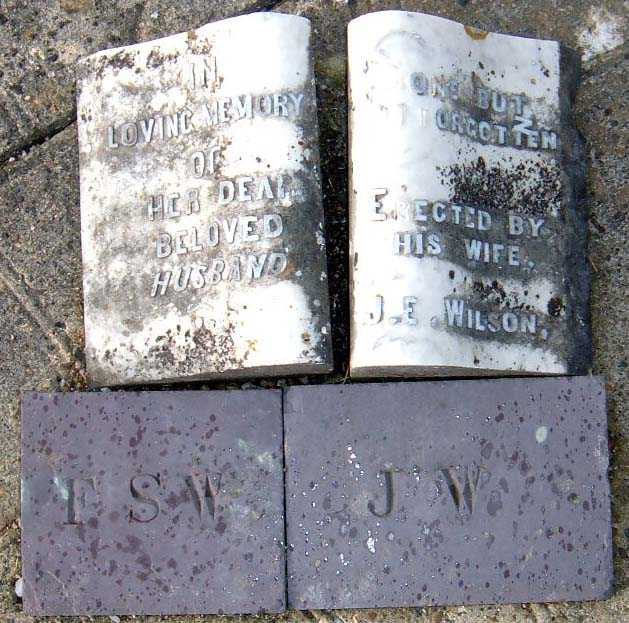
Memorials to Wilson and Wood 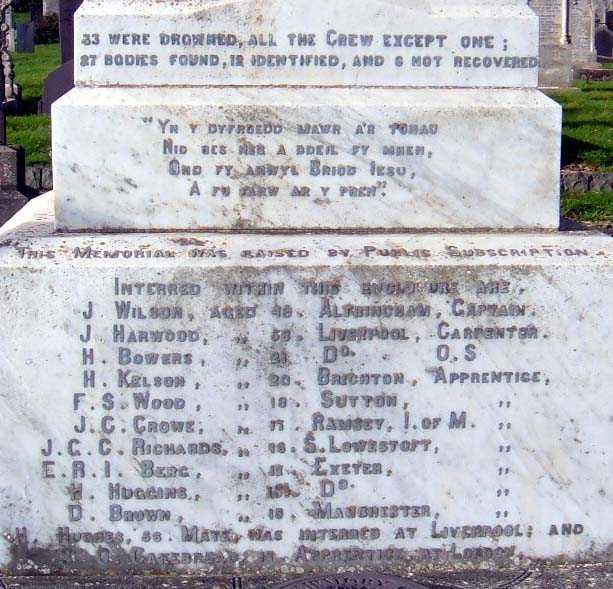
The names of those buried from the Primrose Hill 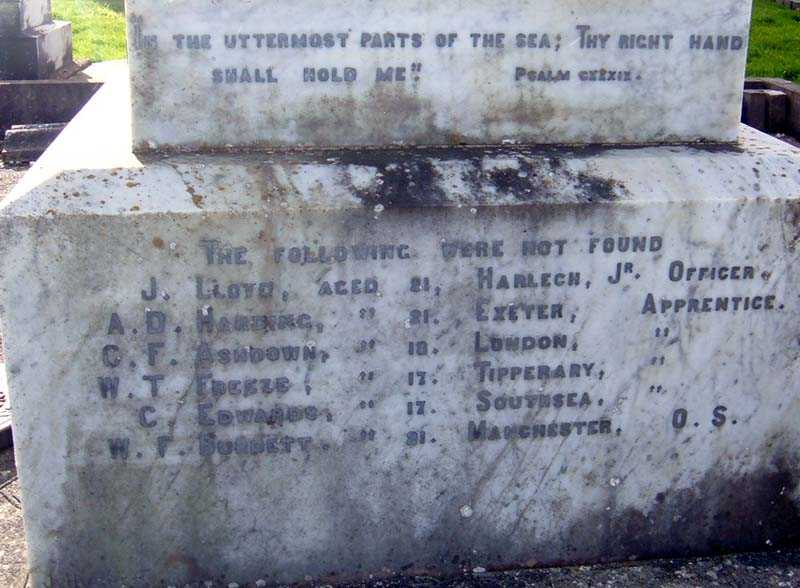
The names of those buried from the primrose Hill 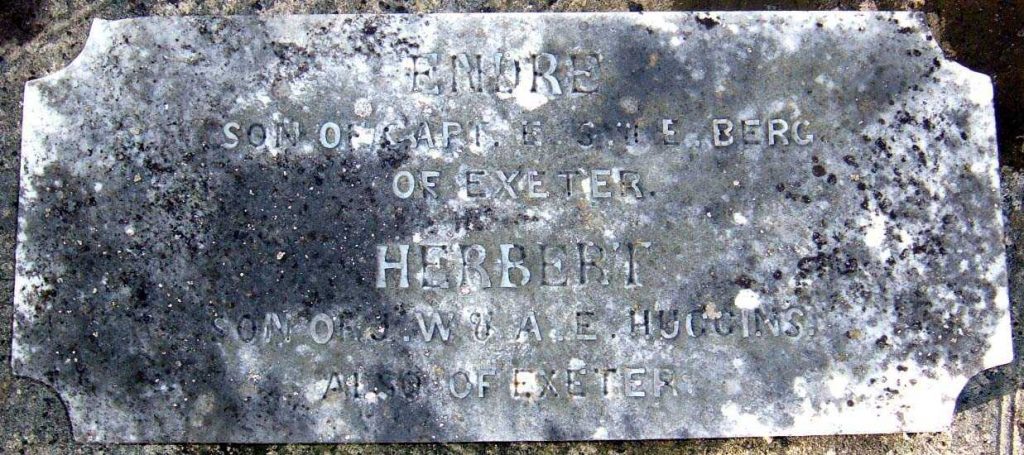
Memorials to Berg and Huggins 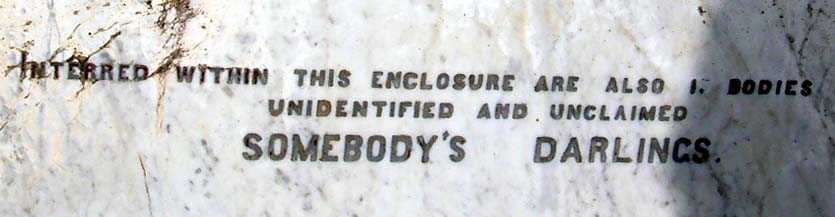
Memorial to those sailors that were unidentified
Only 18 of the names are recorded. These are the names of those found and identified:
| Name | Age | Position | From |
| J. E. Wilson | 48 | Captain | Altrincham |
| J. Harwood | 58 | Carpenter | Liverpool |
| H. Bowers | 21 | Ordinary Seaman | Liverpool |
| Henry Kelson | 19 | Apprentice | Brighton |
| F. S. Wood | 18 | Apprentice | Sutton |
| C. Crowe | 17 | Apprentice | Ramsey, I.O.M |
| J. G .C. Richards | 16 | Apprentice | Lowestoft |
| Endre R. I. Berg | 17 | Apprentice | Exeter |
| Herbert Huggins | 18 | Apprentice | Exeter |
| D. Brown | 15 | Apprentice | Manchester |
| H. Hughes | 56 | Mate | Liverpool |
| S. G. Cakebread | 17 | Apprentice | London |
The names of those who perished, but were never found:
| J. Lloyd | 21 | Junior Officer | Harlech |
| A. D. Harding | 21 | Apprentice | Exeter |
| C. F. Ashdown | 18 | Apprentice | London |
| W. T. Freeze | 17 | Apprentice | Tipperary |
| C. Edwards | 17 | Apprentice | Southsea |
| W. F. Burgett | 21 | Ordinary Seaman | Manchester |
The only survivor was the lookout, at his upper mast post. He was able to scramble ashore without as much as a soaking.
Bibliography 1900 Appx C Table 1 p131(779) : Board of Trade Wreck Returns.
Annual Parliamentary Return as part of State Papers, 1855-1920
1990 Ed p565 : Dictionary of Disasters at Sea in the Age of Steam. 1969 &
1990. Hocking, C. Lloyd’s Register of Shipping. London ISBN 0-948130-68-7
1896-7 No 596(P) : Lloyd’s Register of Shipping, annually from 1745 to date.
Lloyd’s Register of Shipping, London
p72 (photo), 86 & 200 : Shipwrecks of North Wales.1973 & 2001. Wynne-Jones,
I. David & Charles & Landmark Publishing, Ashbourne, Derbyshire. ISBN
0-7153-5787-5 & ISBN 1-84306-005-1
WRNW Vol 1 p127 :
Deep Water Sail, Underhill (photo) :
Holyhead, The Story of a Port, Hughes & Williams :
BSAC Wk Register Vol 7 No 14 (083)


