Photographic Archives in Anglesey

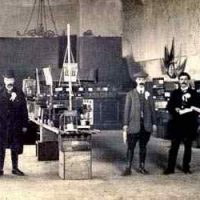
Anglesey, Holyhead Market 1908.
The idea for, and the implementation of a site that preserved North Wales photographs were originally thanks to Frank Armstrong. With a desire to preserve the extensive – and now historically important – work done by the photographers of the various postcard companies, Frank launched Times Past, and began an important historical reference site.
In December 2004, due to other commitments Frank was unable to continue with the site, and I therefore took up the banner of webmaster. Update: Sadly, Frank Armstrong passed away in February 2007. Rest in Peace Frank.
Thanks to Mr Haydn Morris and others like him I have launched thousands of photographic and postcard images.
The aim of this site has always been to make these images available to everyone with an interest in the pictorial history of North Wales. If you are a collector of North Wales photographic postcards or photographs, or indeed if you just have a couple of old photos or postcards in the draw, we would really appreciate it if you were able to get them scanned and emailed to us. Thus we will build a portfolio of North Wales postcards to be proud of, which may be kept online in perpetuity.
Most people are interested in old photographs, if only to see how their own town or village looked in times past. For this reason, I intend sorting the images by that criteria, as one is then able to look at each town individually. Eventually, from just the images that I already have, there will be thousands of excellent photographs on this site for you to enjoy free.
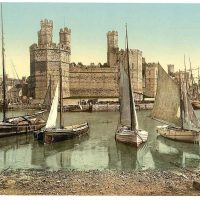
Caernarfon in North Wales is widely known for two main reasons; it is the home of what is undoubtedly the finest of all King Edward I’s castles, and it is where male heirs to the throne of England are invested as Prince of Wales. The last person
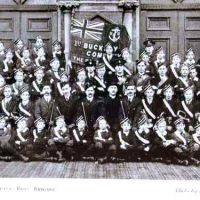
Buckley (Bwcle) in North Wales Buckley ( Bwcle in Welsh) was built up around the coal, brick-making and pottery industries, and even though coal production had all but stopped by the mid-1930’s the brick and pottery industries were still going VERY strong – long after the last
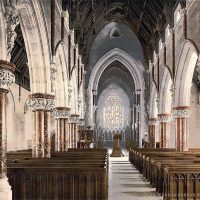
Bodelwyddan in North Wales is the home of – arguably – North Wales most beautiful church. Known as the marble church, it is sadly also known as the place that the young Canadian soldiers were laid to rest after being shot at the end of the war
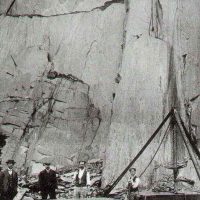
Blaenau was an area of North Wales that was extensively mined for the extraction of slate and slate products. The area is still home to a thriving slate industry, and some old mines have been turned into tourist attractions. The nearby Manod Quarry is where the national
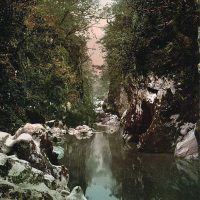
Betws y Coed in North Wales has been a favourite place for a holiday in North Wales since Victorian times. It’s picturesque surroundings and laid back pace make it one of the must place to visit. A visit to Fairy Glen is highly recommended.
Bethesda in North Wales is a slate quarrying area and has been for hundreds of years. The main landowner was Lord Penrhyn, who became enormously wealthy from the earnings of his quarries and mines. The real cost of slate could – unfortunately – be counted in the
Beddgelert in North Wales. Beddgelert in English means grave of Gelert. The legend tells us that the Prince of North Wales, Prince Llewellyn, had a palace at Beddgelert. One day he went hunting, leaving his faithful hound – Gelert – to look after his baby son. When
Barmouth in North Wales is located on the west coast of Wales and is a popular seaside holiday destination, especially for camping and caravan holidays.