All about the Isle of Anglesey (Ynys Môn) North Wales
Water Mills and Windmills in Anglesey
The Windmills, Water Mills and Woolen Mills (Felinau) on the Isle of Anglesey (Ynys Môn) in North Wales
Anglesey, Llanddeusant, Llynon Windmill – the only working windmill in Wales.
In February 2015, I was asked by a lady named Judy Gordon if she could paint the above image, as she is learning to paint. Imagine my surprise when just two days later she sent me this image of her painting. I know you will agree that it is superb.
Judy Gordon’s painting of Llynon Windmill.
When these pages are complete, I can assure you they will be the most complete and correct record – to the best of my abilities – with the highest resolution images available anywhere on the internet. I have carried out my own research, and hope to record Anglesey’s windmills, water mills, tide mills, fulling mills, and any other type of mills.
I would be indebted to anyone that is able to supply me with high-resolution scans or indeed the original old photographs of any Windmills, Water Mills and Woolen Mills of Anglesey.
The History of Watermills and Windmills on Anglesey
The history of the Watermills and the Windmills on Anglesey will probably have began during the occupation by the Romans, who were known to have used them.
Amongst the earliest of written records that mention Mills on Anglesey is King Edward III’s Extent of 1352, which mentions over 60 Mills. Other important records are the Inventory of Ancient Monuments in Anglesey, printed in 1937, which mention over 30 Mills. In 1958, R.O. Roberts of the Anglesey Antiquarian Society wrote an informative guide to the history of many of the Mills, and copies may be viewed in Anglesey’s Libraries – at least, they may in Holyhead Library, where I did much of my research.
In 1992, Barry Guise and George Lees published a book titled ‘Windmills of Anglesey’, which I can recommend as an extremely interesting read, and I have to thank them for much of the information that is published on these pages.
In the 18th century, William Buckley kept diaries which have been a great source of information, and also give a good insight into Anglesey life during that time. It is from those diaries that we know when many of the Mills were actually built, as of the Windmills still seen today, none were built before 1737, and the latest was built in 1862.
In the early 1800s, Anglesey could boast approximately one hundred mills, of which about one half were Windmills. Anglesey was so fertile – and known for being so – that its boast was that the island was fertile enough to feed the whole of Wales. Hence the saying in Welsh – Môn Mam Cymru – the Mother of Wales. Anglesey was also referred to as the ‘Granary of Wales’.
Sadly, many of Anglesey’s Mills have now been lost to the ravages of time and the elements, or have been demolished to make way for house building, but nevertheless there are many ruins still to be seen. An ever-increasing amount have been tastefully (in my opinion) converted to dwellings, whilst maintaining their identities as Windmills and Watermills, which is possibly as a result of the vast majority of them (but not all) being listed buildings.
Felin is a mutation of the welsh word Melin meaning Mill, Môn is the Welsh name for Anglesey. Ynys Môn is the Isle of Anglesey. Melin Gwynt is Windmill, Melin Dwr is Water Mill.
Anglesey Rivers
Of course, water mills would be useless without the water that powers the wheel, and we are fortunate to have quite a few rivers here on Anglesey. Now before you perfectionists reach for your email programs, what constitutes a river is quite interpretational – in fact, a river is just a large stream. When you look up the meaning of river, there are many versions of what is supposed to be the criteria for qualifying as a river. Suffice to say, I best liked the version that reckoned that you had to swim across a river, but you could walk across a stream. End of.
I could find no list of Anglesey rivers on the internet that numbered more than five, so for that reason here is my list of Anglesey rivers:
Afon Alaw, Afon Braint, Afon Bran, Afon Cadnant, Afon Cafnan, Afon Caradog, Afon Cefni, Afon Ceint, Afon Crigyll, Afon Ffraw, Afon Goch, Afon Lleiniog, Afon Lligwy, Afon Marchogion, Afon Meddanen, Afon Nodwydd, Afon Wygr.
If you believe you can add to that list, please let me know.
Update – February 2010 – It is becoming apparent that there are on Anglesey the remains of many more mills – in particular, water mills – than one might originally have believed!
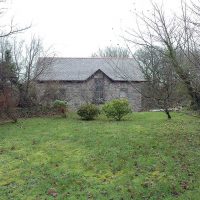
Named Felin Bach, on the Isle of Anglesey (Ynys Môn) in North Wales. I visited the site of Felin Bach Water Mill in Dwyran on December 2009 and was met by the owner – Patrick – who enthusiastically spoke with me about the mill and the conversion
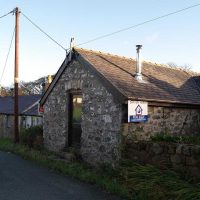
Felin Dulas on the Isle of Anglesey (Ynys Môn) in North Wales. Mentioned in King Edward III’s Extent of Anglesey in 1352, there has been a corn mill named Dulas Mill here for over 600 hundred years. The Mill took its’ energy from the Afon Coch (Red
Known as Melin Dryllia on the Isle of Anglesey (Ynys Môn) in North Wales. Melin Dryllia Windmill is in a very elevated position looking down on Church Bay, and along with Llanrhuddlad Church (which gives the bay its’ name) would have been a positional indication for sailors.
Melin Cefn Coch (also known as Caerdegog Uchaf) on the Isle of Anglesey (Ynys Môn) in North Wales. I have put the location of Melin Cefn Coch Windmill as being in Cemlyn – it is not! In truth, it is pretty much equidistance between Cemlyn, Tregele and
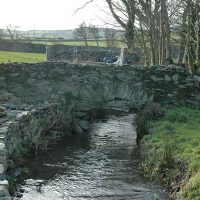
Felin Cafnan Water Mill (once known as Melin Cathaern) on the Isle of Anglesey (Ynys Môn) in North Wales. The present building – once a water-powered corn mill – was built at the beginning of the 19th century, although the machinery inside all dates to around 1840.
Melin Cemaes Windmill on the Isle of Anglesey (Ynys Môn) in North Wales. Melin Cemaes Windmill began its’ working life somewhere around 1828 and was still grinding corn up until the late 1920s. As with several of Anglesey’s Windmills a diesel engine was at some stage fitted
Known as Melin Llwydiarth (also Bryn Felin) on the Isle of Anglesey (Ynys Môn) in North Wales. Melin Llwydiarth Windmill was built in 1738, and operated as a corn mill, becoming disused by the early 1900s. On the 1881 census for Llanfihangel Tre’r Beirdd, the windmill is
On the Isle of Anglesey (Ynys Môn) in North Wales. This windmill was within walking distance of the toll house in Caergeiliog. It was demolished to make way for a bungalow. The above image of a windmill is from my garden and will be used when no
Melin Y Pant on the Isle of Anglesey (Ynys Môn) in North Wales. Little is known about the origin or date of this windmill, only that it had probably stopped working by the 1880s. Probably the smallest of Anglesey’s Windmills that I have seen, this windmill would
Known as Melin Rhos Fawr on the Isle of Anglesey (Ynys Môn) in North Wales. Melin Rhos Fawr at Brynteg near Benllech was opened in 1757, so in terms of the Windmills still in existence, it is one of the earliest. By 1881 the Windmill was in
We use cookies and other tracking technologies to improve your browsing experience on our website. We collect data and use cookies for ad personalisation and measurement. Cookies may be used for personalised and non-personalised advertising. Visit Google’s Privacy & Terms site to find out more about how Google uses this data. View our cookie policyAccept & Close